1970
The film Praise Marx and Pass the Ammunition was shown in the UK in January 1970.
An unusual role for John came in a mini-series documentary on the BBC entitled On Trial, which aimed to re-enact famous trials from history, with the actors reading transcripts from the court.This episode explored the trial in Paris in 1945 of Marshal Pétain. John took the role of General Weygand.
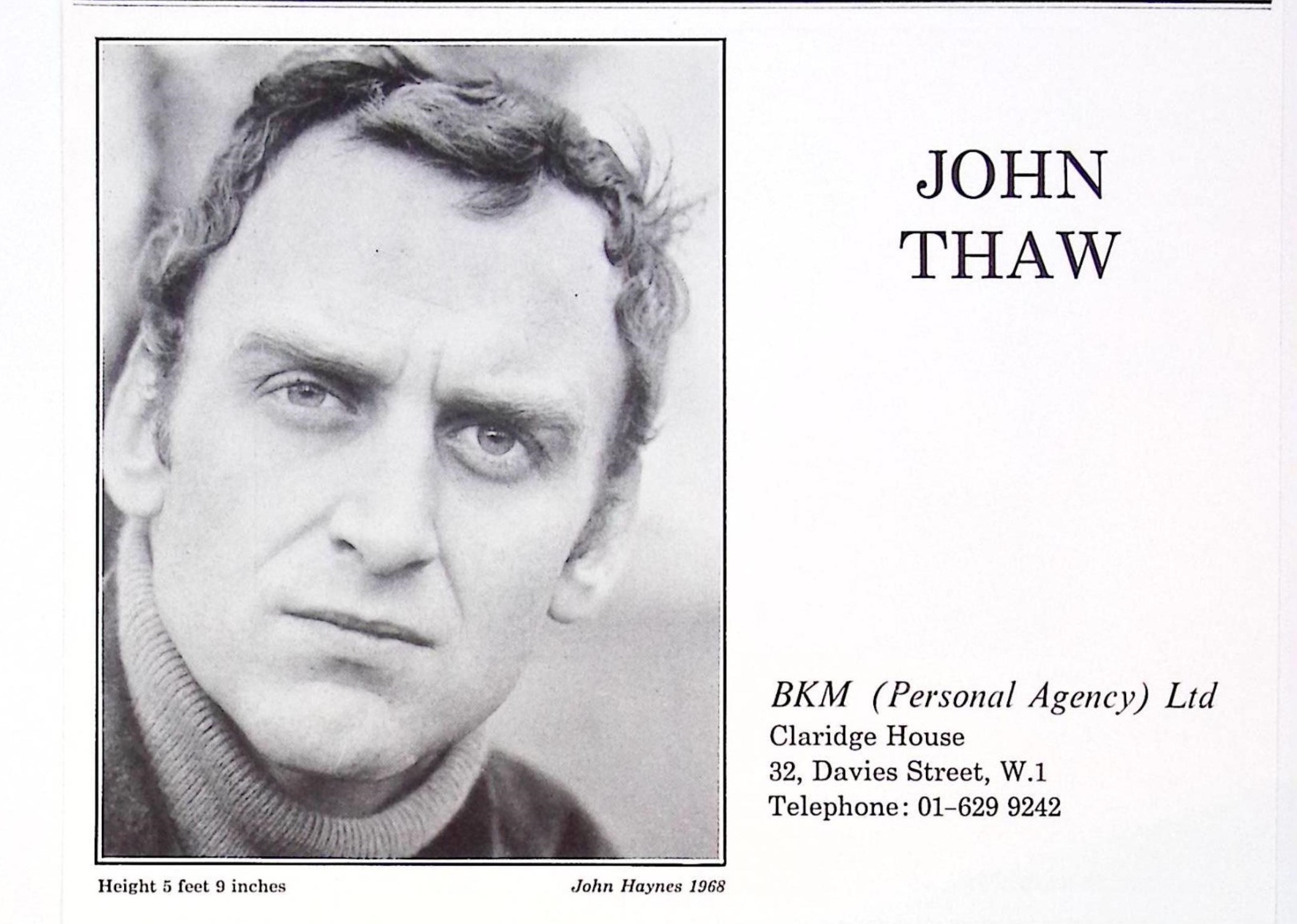
A second big screen appearance for John this year was in the wartime drama The Last Grenade. This gave John the opportunity to work alongside actors including Stanley Baker, Honor Blackman, and Richard Attenborough.
In early April, he took a turn at directing. David Halliwell’s Little Malcolm and His Struggle Against the Eunuchs opened for a three-week run at the Mercury Theatre in Notting Hill. Starring Anthony May, it gained favourable reviews, and John’s direction received high praise. In the role of Ann in the play was actress Joanna David, who would work with John again twenty years later when she played Inspector Morse’s lost love, Susan.
This year, John took a Shakespearean role, playing Banquo in a production of Macbeth, filmed by the BBC for the Play of the Month. It was broadcast in September.
In September 1970, John starred in the play Random Happenings in The Hebrides. This was presented by The Royal Lyceum Theatre Company of Edinburgh, as part of the Edinburgh International Festival. John received excellent reviews for his performance as Jimmy.
He continued to appear in TV plays, including Dying Gets You Nowhere, part of an anthology series entitled Big Brother, inspired by Orwell’s famous novel of the same name; and Don’t Walk Away from the anthology series Happy Ever After. (Not to be confused with the popular TV sitcom of the same name!)
1971
In April/May, John appeared in Ibsen’s The Lady from The Sea at The Greenwich Theatre, London.
He made several TV appearances, including the ITV Sunday Night Drama play Turn of the Year: The Parcel. A memorable guest performance was the role of the Welshman ‘Denzil’, in the popular television series Budgie. The episode was first shown in June 1971.
A notable co-starring role was in the hour-long TV play, Competition, part of the ITV anthology series Armchair Theatre. It was broadcast in October. The play is highly watchable, with the tension between the characters portrayed well.
A further theatrical role was as George in the harrowing drama play Friday, (translated from the original Dutch title Vrijdag) by Belgian writer Hugo Claus. It was performed at the Theatre Upstairs, Royal Court, London, opening on 24 November 1971.
On 4 December, Sheila Hancock’s husband, Alec Ross, died from cancer.
Another TV anthology play, Suspicion: I’ll Go Along With That saw John cast as a private investigator.
John appeared in a guest role in the historical drama series The Onedin Line. The episode “Mutiny”, was written by Ian Kennedy Martin. The episode has a strong plot, and John plays the role to excellent effect. It was broadcast on 24 December.
1972
John’s television guest roles included the role of dastardly ‘Fast Jack’ in an episode of the historical adventure series Pretenders. The episode, “The Paymaster”, was broadcast in April. John’s performance as the rough-and-ready villain is both fascinating and entertaining to watch, another example of his versatility.
He gave a chilling performance as a former soldier out for revenge in the episode “Old Comrades”, part of the collection of plays The Frighteners.

John appeared in a second TV play for Armchair Theatre, entitled What Became of Me? It was written by Roger Marshall, who had written the screenplay for Five to One and episodes of Redcap.
Another play for ITV Playhouse, Refuge for a Hero, saw John cast as a villain. His character, a mountain climbing instructor, takes refuge in a rescue hut during a blizzard, but is strangely unwilling to discuss the fate of others left outside. The play was broadcast on 6 September 1972.
John appeared again on the cinema screen, albeit in a minor role. The Vincent Price Horror Dr. Phibes Rises Again was released in September 1972 in the UK. John’s character, Shavers, soon meets with an unpleasant demise.
His talents were put to better use in an episode of the children’s series The Adventures of Black Beauty, evoking sympathy in his role of a convict on the run. Series 1, Episode 2, “The Hostage” was first shown on 30 September 1972.
1973
An excellent TV role for John was as the title character in the TV play The Sensible Action of Lieutenant Holst, which was part of the anthology The Rivals of Sherlock Holmes. The play was first broadcast in March 1973. Some aspects of the character of Holst may seem faintly familiar to Inspector Morse audiences.
More television roles followed. Tom, an episode of the thriller anthology series Menace, was broadcast on 26 April 1973.
A BBC production of The Caucasian Chalk Circle was broadcast on 16 May 1973, and Passengers was filmed for the ITV Sunday Night Theatre by Granada Television. It was broadcast on 20 May 1973.
John starred alongside Glyn Owen and Peter Sallis in the TV series The Capone Investment. This crime-thriller series was created by Ian Kennedy Martin. It is an excellent, engaging series, with a strong role for John. The first episode was broadcast on 4 July 1973. The series was repeated a year later in July 1974.
John appeared at the Duchess Theatre in the play Collaborators by John Mortimer, taking over the role of ‘Sam Brown’ from actor Joss Ackland in July.
24 December 1973
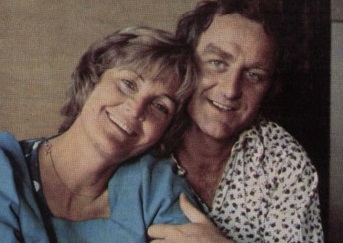
John had renewed his friendship with Sheila Hancock after the death of her husband, Alec Ross. The relationship between the pair blossomed into romance, and the couple agreed to marry. Their marriage took place on the 24 December at Cirencester Registry Office, near Sheila’s home in Tarlton. John’s daughter, Abigail, and Sheila’s daughter, Melanie (‘Ellie Jane’) were delighted to become proper sisters. Born in July 1964, Ellie Jane was only a year older than Abigail.
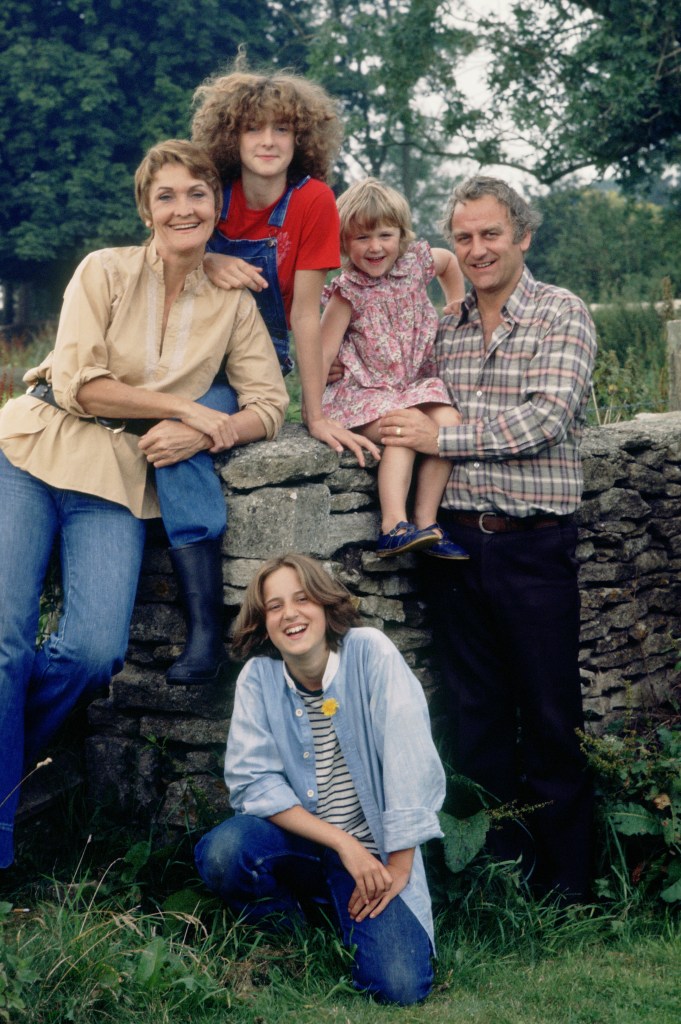
Sheila was in the middle of a run of the play Absurd Person Singular at the Criterion Theatre when she and John were married. They would have one day off –Christmas Day- for a honeymoon! (Hancock, 2004, p. 158). The couple bought a home together in Chiswick.
On Boxing Day, as Sheila returned to the stage, John attended a meeting with producer Ted Childs and director Tom Clegg, to discuss plans for a television play, Regan, which was to be the pilot episode of a new series.
As the year ended, John appeared on television screens in an episode of the Gerry Anderson spy series The Protectors. Series 2, Episode 15, “Lena” was broadcast on 28 December 1973.
1974
2 February 1974
Dolly (Dorothy), John’s mother, died from cancer at the age of fifty-two. She had been living with her sister, Cissie, in Longsight, Manchester. The strained relationship between mother and son had remained unresolved, however, a photograph of herself and John, taken on what was likely his final visit to her, was discovered in her handbag.
John’s television career was really gathering momentum this year. He co-starred with Bob Hoskins and Pat Ashton in the popular TV sitcom Thick as Thieves, playing the cheeky but loveable ‘ex’-burglar Stan. (Is he a reformed character, or not?) The first episode went out on 1 June 1974.
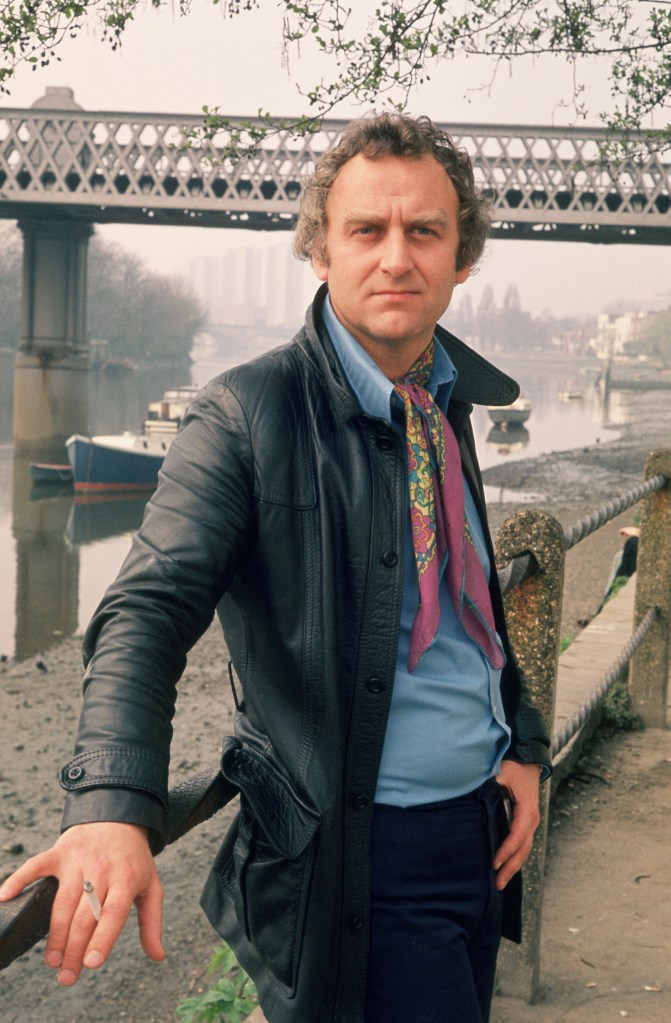
Meanwhile, plans for Regan and the subsequent series The Sweeney were progressing. In her book The Two of Us, Sheila Hancock writes that John ultimately chose to “take a chance on the pilot show of Regan … rather than another series of Thick of Thieves”, since its creators were so persuasive! (p. 164).
Regan was written by Ian Kennedy Martin, with John in mind for the lead role of the tough, flawed Detective Inspector. The idea was accepted by producers Lloyd Shirley and George Taylor, (with whom John had previously worked on Redcap) along with producer Ted Childs. Ted was to become a mentor for John, and would go on to be executive producer on many of his later work, including Inspector Morse, Kavanagh Q.C., Goodnight Mister Tom.
Filming started in April, and the finished work, Regan, was broadcast on 4 June 1974 as part of the Armchair Cinema series.
Euston Films, then a subsidiary of Thames Television, commissioned The Sweeney based on the pilot film, and filming for the series started this year. John was thirty-two years old.
July 1974
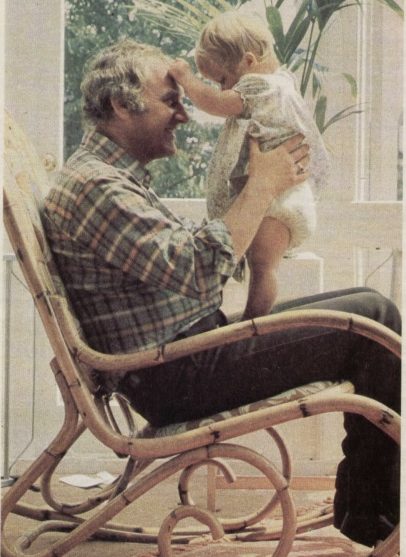
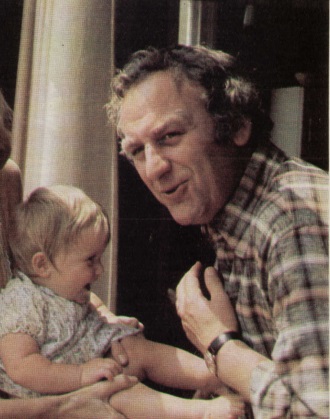
John and Sheila’s daughter, Joanna, was born.
1975
This year kicked off with the fruits of the previous year’s filming. “Ringer”, the first episode of The Sweeney, written by Trevor Preston and Ian Kennedy Martin, was broadcast on 2 January 1975. John and Dennis watched the episode at John’s home, along with John’s Dad who had travelled from Manchester for the occasion.
The first series ran until the end of March.
Meanwhile, Colin Dexter’s first Inspector Morse novel, Last Bus to Woodstock, was published in January this year.
The Sweeney continued to keep John busy, with filming for series two taking place during the spring and summer of 1975. The second series was broadcast from 1 September 1975. During this second series, writer Roger Marshall joined the crew. He had worked with John Thaw previously on Five to One, Redcap, and Armchair Theatre.
The second series of The Sweeney saw ratings soar. The popularity of the series led to plans for a film spin-off, which was to be filmed the following year.
In family life, John formally adopted Sheila’s daughter Melanie, ‘Ellie Jane’.
1976
This was another busy year for John. In a venture far different to The Sweeney, he toured on stage in the Alan Ayckbourn play Absurd Person Singular, which opened at the Wimbledon Theatre, London, on 3 February and toured the UK through February and March.
John then returned to London to begin work on the feature film Sweeney! Filming began on 5 April 1976 and took five weeks. The film would be released in January 1977.
John with Lynda Bellingham and Diane Keen, during the filming of the feature film Sweeney!
Filming for a new set of episodes then commenced, as the UK experienced the longest consistent run of hot weather in the now infamous ‘ long hot summer’ of 1976. This third series of The Sweeney was broadcast from 6 September to 20 December.
The same year, John and Dennis were invited to guest-star on The Morecambe & Wise Christmas Show, broadcast Christmas Day 1976. In return, Eric and Ernie were asked to appear in an episode of the next series of The Sweeney.
On 24 November 1976, Sheila Hancock was surprised by Eamonn Andrews for This Is Your Life after a performance of the play The Bed Before Yesterday, in which she was appearing at the Lyric Theatre, London. John was of course in on the set-up (along with their daughters), and took part in the filming. The episode was shown the following January.
1977
In January 1977, Sweeney! the first of two theatrical films based on the hit series was released. The film was a huge success financially and sold worldwide (Fairclough and Kenwood, 2002). A second film was quickly suggested.
With no television series of The Sweeney on screen this year, the film also filled the gap in between the end of the third series the previous year, and the fourth and final series in 1978.
On 5 January 1977, Sheila Hancock’s This Is Your Life was broadcast.
An offer for both Sheila and John to appear on stage in Australia in Michael Frayn’s The Two of Us provided an ideal opportunity for John to take the whole family to visit his brother Ray and family in Brisbane, with John’s father looking after their daughters whilst John and Sheila were on stage. The play was performed at the Theatre Royal, Sydney, from 14 February to 12 March 1977, and the Comedy Theatre, Melbourne, from 16 March to 9 April 1977.
After the tour in Australia, John and Sheila, along with Ellie Jane, visited Bali and then India, the latter making for a less enjoyable experience. Sheila writes about their discomfort witnessing the poverty in India. John eventually refused to leave the hotel, longing for home (p. 176).
Back in the UK, John returned to the stage. The play Fair Slaughter (1977) was performed at The Royal Court Theatre, London, opening on 13 June 1977.
Later in the year, it was back to The Sweeney for the filming of the second feature film. The somewhat unimaginatively titled Sweeney 2 had a nonetheless excellent script written by seasoned Sweeney writer Troy Kennedy Martin. Filming began on 7 November 1977, lasting for five weeks. It was to be released the following year.
1978
With the success of The Sweeney and having finished renovating the house in Chiswick, John set his sights on moving to another house down the road, which had a garden backing onto the river. Despite Sheila’s reluctance about taking on another such project, the couple moved to an impressive Victorian Gothic house on Grove Park. (Hancock, 2004, p. 172).
During the filming of The Sweeney, John helped to set up Dennis Waterman ahead of a surprise appearance on This Is Your Life, with Eamonn Andrews appearing with the Red Book on set whilst Dennis was in the middle of a take. The episode was shown on 5 April this year.
Sweeney 2 was released in April 1978. By now, The Sweeney had been absent from television screens for nearly a year and a half. Although an excellent cinematic film, Sweeney 2 underperformed at the box office (Gilbert, P., 2010, p. 234).
The fourth series of The Sweeney was filmed in the summer of 1978. A highlight of this series was working once more with Eric Morecambe and Ernie Wise, who guest-starred in the episode “Hearts and Minds”, as promised after John and Dennis’s stint on The Morecambe & Wise Show.
John and Dennis with the famous comedy duo – Ernie Wise and Eric Morecambe.
However, John and Dennis had begun to feel that it was time to finish the series. As well as feeling that the series had gone as far as it could go, the heavy filming schedule was taking its toll on family life.
At this time, Sheila Hancock was starring as Miss Hannigan in the West End musical Annie. John is quoted as saying that sometimes the couple only saw each other as they passed on the stairs! (Hildred, S., and Ewbank, T.).
Despite this, workaholic John remained busy after finishing The Sweeney, going straight on to a new project filming Dinner at the Sporting Club for the BBC’s Play for Today. As boxing manager Dinny Matthews, he was almost unrecognisable from Jack Regan. The play was broadcast on 7 November 1978.
John was also pleased to be offered the role of the Australian journalist Dick Wagner in Tom Stoppard’s stage play Night and Day. His co-star was Diana Rigg of The Avengers. After some first-night teething troubles at the Wimbledon Theatre, opening at the end of October, the play went on to the Phoenix Theatre, London, opening on 8 November 1978. Its long and successful run gave John a welcome break from television for a while.
John with Diana Rigg, co-star of Night and Day.
John received the honour of winning the Best Actor award at the Evening Standard British Film Awards, held on 28 November. He was genuinely amazed to be chosen from the category that also included nominations for Peter Finch, Anthony Hopkins, James Mason, and Laurence Olivier!
Meanwhile, the fourth and final series of The Sweeney returned to TV screens on 7 September. Fans mourned as the final episode was broadcast on 28 December 1978.
1979
John remained busy appearing on stage in Night and Day through the spring and early summer, with Patrick Mower taking over the role in July.
Next page: 1980s
References:
Hancock, S. (2004). The Two of Us: My Life with John Thaw. London: Bloomsbury Publishing.
Hildred, S. and Ewbank, T. (2012). John Thaw: The Biography. [Kindle]. London: Andre Deutsch.
Bibliography:
Big Red Book. ‘This Is Your Life: Sheila Hancock’. Big Red Book Celebrating television’s This Is Your Life. Available at: https://www.bigredbook.info/sheila_hancock.html
Fairclough, R. and Kenwood, M. (2002). Sweeney! The Official Companion. London: Reynolds & Hearn Ltd.
Gilbert, P. (2010). Shut It! The Inside Story of The Sweeney. London: Aurum Press Ltd.
IMDb contributors (2024). ‘John Thaw’. IMDb. Available at: https://www.imdb.com/name/nm0857177/
Wikipedia contributors (2024). ‘John Thaw’. Wikipedia, The Free Encyclopedia. Available at: https://en.wikipedia.org/wiki/John_Thaw

 John Thaw Archive