1960 – 1961
Season at Liverpool Playhouse
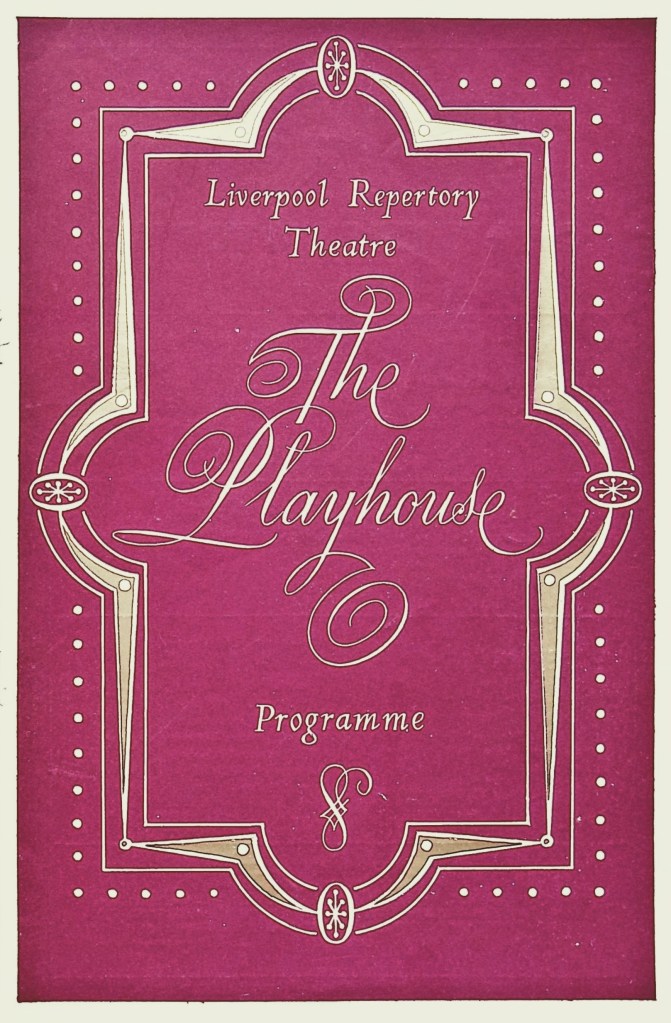
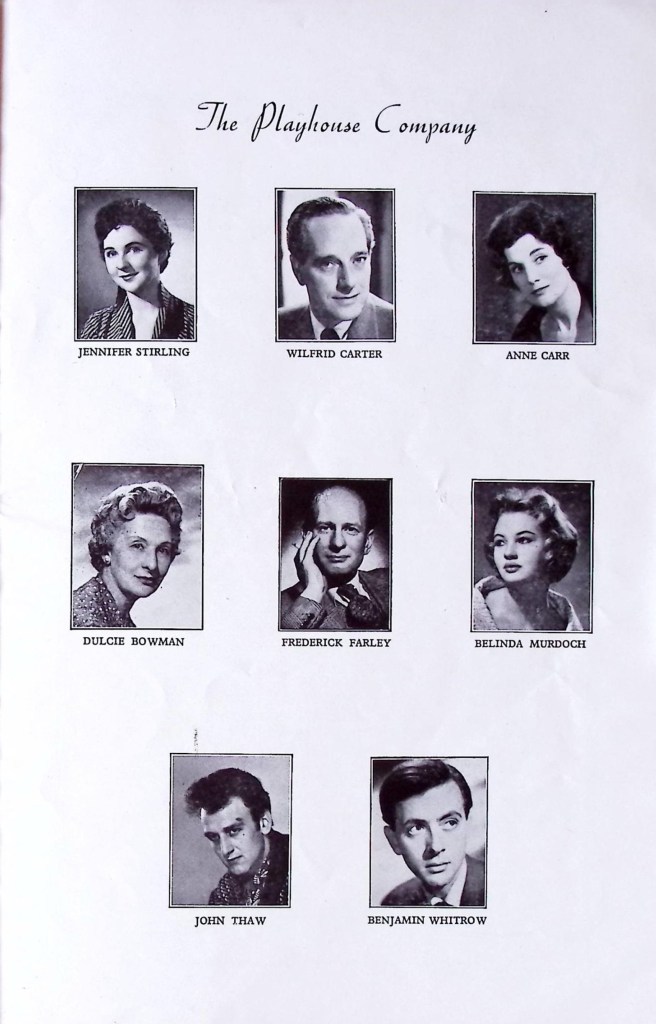
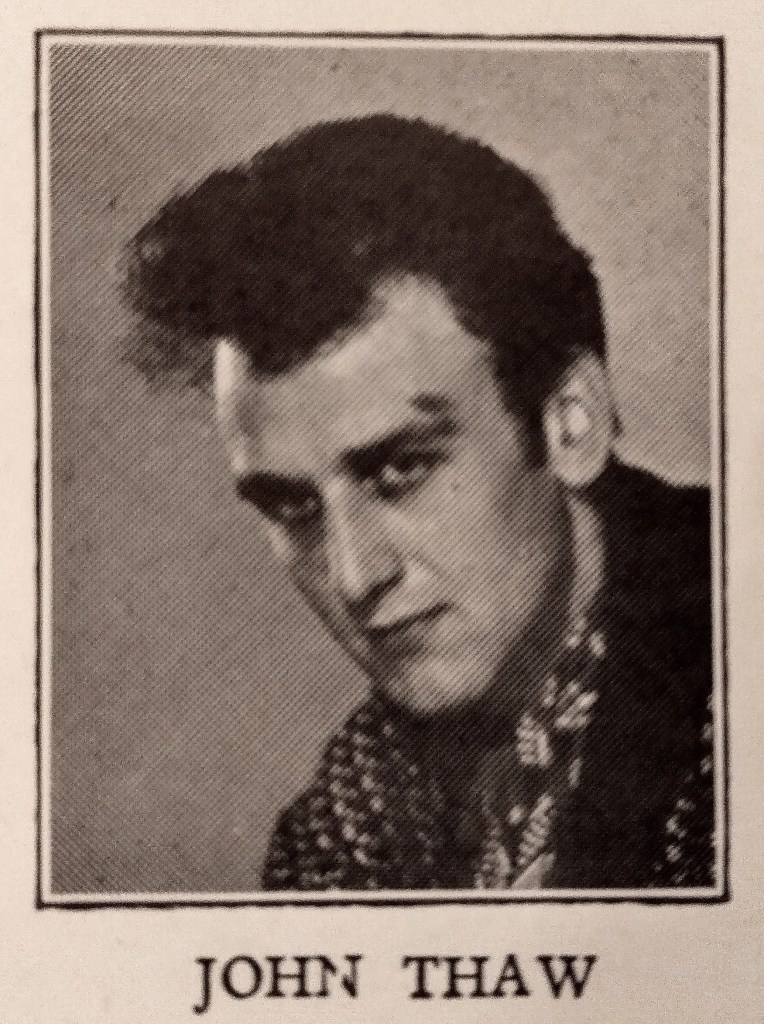
John graduated from RADA in July 1960. Having won the Liverpool Playhouse prize, which provided a year’s contract, John’s professional stage career began with a season with the Liverpool Repertory Company.
John’s debut at Liverpool was in the crime thriller A Shred of Evidence by R.C. Sherriff, which ran from 16 August 1960. Further plays at Liverpool were All My Sons, Thark, The Wind and the Rain, Candida, Juno and the Paycock, I Killed the Count, and Brer Rabbit. John remained with the Liverpool Repertory Company until January 1961.
1961
Granada Television chose John to be part of The Younger Generation, an anthology series of plays performed by an ensemble cast of up-and-coming young actors.
Also for Granada Television, John appeared in Serjeant Musgrave’s Dance, filmed for ITV’s Play of the Week, in which he played the role of Private Hurst. (Twenty years later, he was to take the title role in this play at the National Theatre!)
From December 1961 to January 1962, John appeared at the Royal Court Theatre in London in The Fire Raisers, playing the Doctor of Philosophy and a fireman.
1962
John appeared in a supporting role in the film The Loneliness of the Long Distance Runner, which starred his pal from RADA, Tom Courtenay. The pair had been flat-sharing at Highbury Crescent during the filming.
John appeared in an episode of the series Probation Officer, and in the TV plays A Smashing Day, and Nil Carborundum.
In July 1962, John appeared on stage in the role of Sordido in Women Beware Women, performed at the New Arts Theatre Club in London.

He could be heard on the radio in November, with a small role in The Vodi, based on the novel by John Braine, (adapted for radio by E.J. King Bull).
Toward the end of 1962 and in early 1963, John appeared in Semi-Detached, which starred his idol, Laurence Olivier. As well as performing in his supporting role of Robert Freeman, John understudied Olivier’s role of Fred Midway and took this leading role when Olivier was off for several nights. According to Sheila Hancock, John’s performance won over the audiences: “The groan when it was announced over the tannoy that Olivier was going to be replaced by a little-known whipper-snapper changed to cheers at the end.” (Hancock, 2004, p. 113).

It was during the run of this play that John met Sally Alexander, who was working as Assistant Stage Manager on the production. The pair were later to marry.
1963
John appeared in the TV plays So Long Charlie and The Lads, and guest-starred on four episodes of the highly popular Z-Cars. This was his first recurring TV role, as Detective Constable Eliot. The role had been suggested by writer Alan Plater, who had become friends with John through Tom Courtenay during the flat-sharing days at Highbury Crescent. Z-Cars was co-created by Troy Kennedy Martin, whom John would later work with on Redcap and The Sweeney.
An excellent role for John was the part of Alan Roper in the Edgar Wallace Mystery Five to One.
These Edgar Wallace films were originally released as a ‘second feature’ at the cinema (shown as an accompaniment to the main film) before being later released on television as part of The Edgar Wallace Mystery Theatre anthology series. The screenplay was written by Roger Marshall, who was to work with John again several times during his career.
In theatre, John performed with the Dundee Repertory Company in the plays The Father and the double-bill The Private Ear and The Public Eye.
1964
John appeared in the ITV Play of the Week I Can Walk Where I Like, Can’t I?, broadcast in February 1964. Also in the cast was a sixteen-year-old Dennis Waterman. (John was only a few years older at the age of twenty-two.) The pair socialized outside of filming and struck up a friendship.
A notable appearance was a guest-starring role on The Avengers. The episode “Esprit De Corps” was broadcast on 14 March 1964.
In June 1964, at the age of twenty-two, John married Sally Alexander, whom he had met whilst appearing in Semi-Detached. Sally was one year younger than John. The pair began married life in Notting Hill.
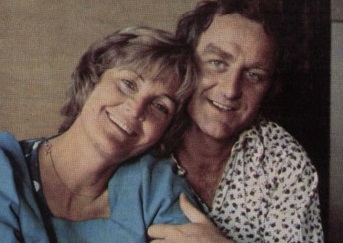
John and Sally at home in 1964.
Broadcast in September 1964 was the ITV Play of the Week The Other Man, in which John appeared with Michael Caine. This notable drama imagined a different future in which Britain had capitulated to Nazi Germany in WWII.
During this year, John gained his first starring role in a television series, Redcap, about Sergeant John Mann, a member of the Special Investigations Branch of the Royal Military Police. The producer, John Bryce, had watched John’s performance in The Avengers and decided that he was right for the role. Thirteen episodes were filmed for the first series.
The series was a hit. John also became friends with writer Ian Kennedy Martin (brother of Z-Cars co-creator Troy) who was to have a later influence on his career.
1965
John starred in the Edgar Wallace Mystery Dead Man’s Chest. As with Five to One, this was originally released as a second feature in cinemas before being later released on television as part of The Edgar Wallace Mystery Theatre anthology series.
John’s father, Jack Thaw, married his second wife, Mildred, now that both his sons were similarly settled.
1st October 1965: John and Sally’s daughter, Abigail, was born.
1966
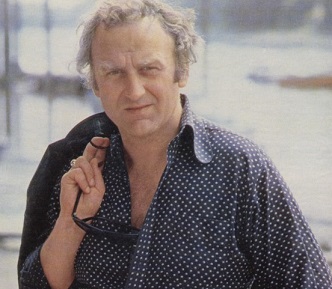
The second thirteen-episode series of Redcap ran on ITV from 2 April 1966, landing a prime viewing time-slot vacated by The Avengers. A series of publicity photos was taken to mark this handover (one included below courtesy of Getty Images). The popularity of Redcap made John a household name, and it was becoming clear that his future lay mostly in television.
However, John also continued to appear on stage. His next role was in La Musica by Marguerite Duras, presented at the Traverse Theatre, Edinburgh as part of a double-bill of Marguerite Duras plays.
John appeared in television plays for both ITV and the BBC, including Seeing a Beauty Queen Home, The Making of Jericho, and The Assassin at the Door.
He took a leading role as Mark Paxton in the Francis Durbage mystery-thriller series Bat Out of Hell. This mini-series of 5 episodes was broadcast between November and December 1966.
1967
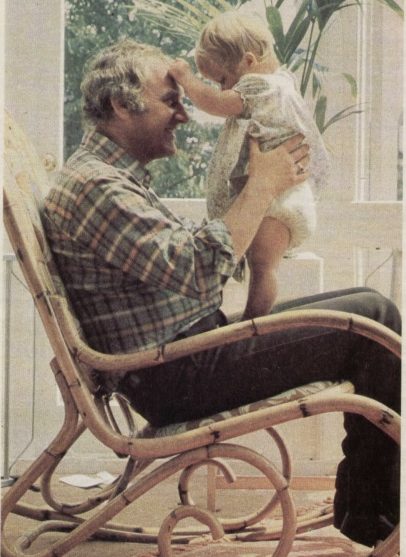
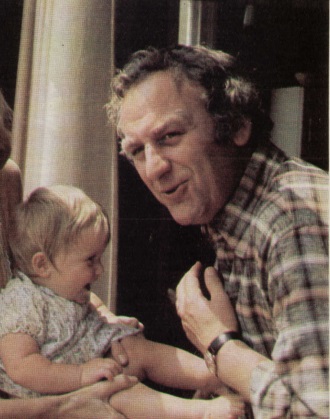
John at home with his daughter, Abigail, in 1967.
Appearing once again at the Liverpool Playhouse, John took the role of Passepartout in Around the World in 80 Days, which opened on 28 February.
Later this year, he could be seen in a starring role on television in the TV mini-series Inheritance, adapted from the novels by Phyllis Bentley.
John played various roles, portraying different members of the same family, of different generations and varying ages. It was filmed in Manchester, which meant that John was able to stay with his father and stepmother. Inheritance was broadcast between September and December 1967.
This year, John’s brother, Ray, along with his wife Anne, emigrated to Brisbane, Queensland, Australia.
Sadly, John and Sally’s marriage was coming to an end, and John was to move out. His pal from RADA, Nicol Williamson, came to the rescue when John was in need of a place to stay. Ian Kennedy Martin and his wife Barbara also provided friendship and support.
1968
John appeared in the theatrical film The Bofors Gun, along with Nicol Williamson, David Warner and Ian Holm. This military drama was adapted by John McGrath, with whom John had previously worked on Z-Cars. It was directed by Jack Gold. The role of Featherstone, a rough, cockney bully, was far removed from the professional Serjeant Mann of Redcap, giving John an excellent opportunity to show his versatility. The film, directed by Jack Gold, was well received.
However, John struggled to find work for several months this year. This quiet period eventually ended as he gained a guest role in the historical drama series The Borderers.
Another role was in Maurice Hatton’s theatrical film Praise Marx and Pass the Ammunition. This political satire starred John as ‘Dom’, a Marxist-Leninist revolutionary. It would be shown in the UK from January 1970.
John and Sally were formally divorced.
1969
The Borderers episode, “Dispossessed”, in which John appeared, was broadcast in March.
Another significant guest-starring role was in an episode of the crime drama series Strange Report. The episode “Report 2475: Revenge – When a Man Hates” was broadcast in November.
John appeared in various television plays for ITV, including The Haunting, and The Talking Head (including a memorable scene in which he gave a furious speech), and In Another Country.
So What About Love? – Meeting Sheila Hancock.
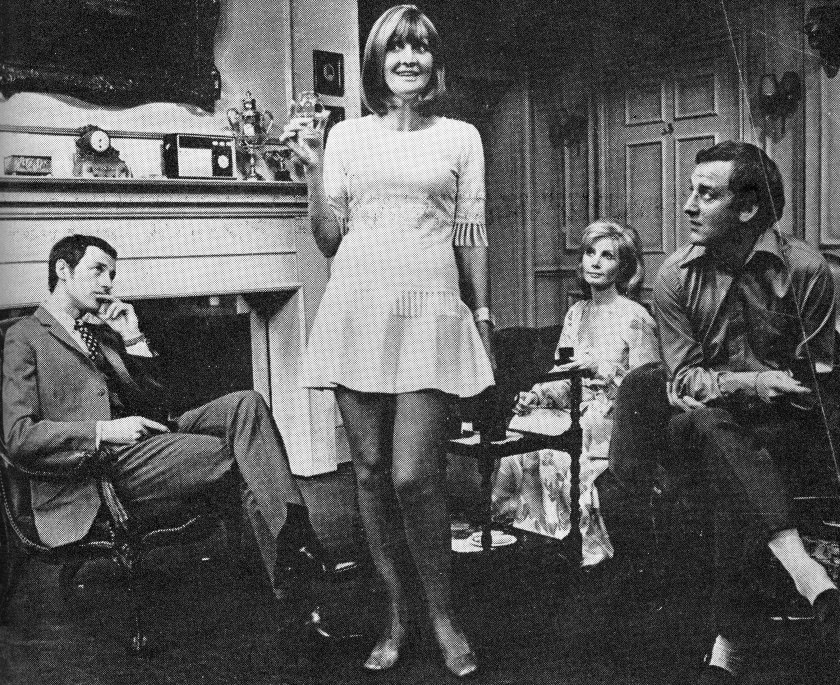
While he was in Manchester filming for television, John received a call suggesting a part in the West End comedy So What About Love? The star, Sheila Hancock, wanted to meet him before he was offered the role. After initial misgivings on both sides, John and Sheila became good friends during the pre-London tour of the play, bonding over a shared love of classical music.
John was able to buy his own London flat, in Troy Court in Kensington. He had been staying with Nicol Williamson, and later with friend and actor Ken Parry.
So What About Love? opened at the Criterion Theatre in London’s West End on 16 September 1969 and was to run until March 1970. In the final week of the run, John confessed that he had fallen in love with Sheila. “I just wanted you to know, that’s all”, Sheila Hancock remembers him saying. (Hancock, 2004, p. 144). Sheila was happily married to actor Alec Ross, so her relationship with John remained as a friendship.
.
Next page: 1970s
References:
Hancock, S. (2004). The Two of Us: My Life with John Thaw. London: Bloomsbury Publishing.
Bibliography:
BBC Genome (2023). ‘Programme Index: “JohnThaw”’. Programme Index. Available at: https://genome.ch.bbc.co.uk/search/0/20?q=%22John+Thaw%22#top
Fairclough, R. and Kenwood, M. (2002). Sweeney! The Official Companion. London: Reynolds & Hearn Ltd.
Hildred, S. and Ewbank, T. (2012). John Thaw: The Biography. [Kindle]. London: Andre Deutsch.
IMDb contributors (2024). ‘John Thaw’. IMDb. Available at: https://www.imdb.com/name/nm0857177/
Tibballs, G. (1996). Kavanagh Q.C. London: Carlton Books.
Wikipedia contributors (2024). ‘John Thaw’. Wikipedia, The Free Encyclopedia. Available at: https://en.wikipedia.org/wiki/John_Thaw


 John Thaw Archive